People
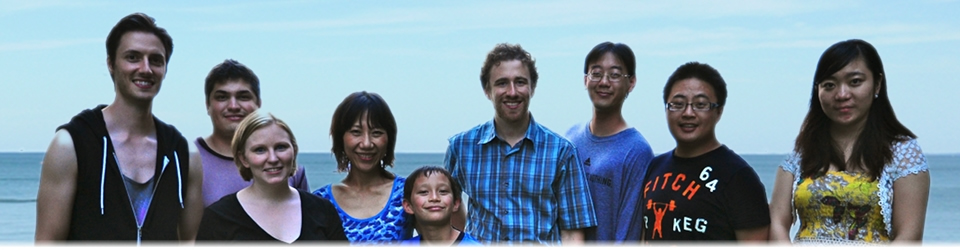
While our lab has world class facilities and consistently employs cutting edge techniques, it is really the people who work here that makes this a premiere place to work and do research. The Hemodynamics Lab is comprised a diverse yet cohesive group of individuals, which are organized into two main groups: One principaly investigates the biological mechanisms of the vasculature during hemodynamic insult, and the other simulates the related events using advanced computer technology. Together the people at the hemodynamics lab are some of the most friendly, intelligent, capable people working together towards common goals.
Faculty
 Hui Meng, PhD
Professor
Mechanical & Aerospace Engineering
http://www.mae.buffalo.edu/people/full_time/h_meng.php
 John Kolega, M.Phil, PhD
Associate Professor
Dept. of Pathological & Anatomical Sciences
My primary research interest is the behavior of endothelial cells, which form the inner lining of blood vessels and are key players in the remodeling events that occur during wound healing, aneurysm formation, tumor growth, and a wide variety of disease conditions. In my own lab we look at how endothelial cells sense and respond to their mechanical environment. Here at the TSRC, I mentor students in the use of cell culture and whole animal systems to examine how endothelial cells respond to specific hemodynamic micro-environments in order to understand the mechanism and regulation of flow-induced remodeling, especially as it relates to cerebral aneurysms.
Students
vascular biology | computational simulations
Vascular Biology Subgroup
Jennifer Dolan
PhD Neuroscience Candidate
My research focuses on identifying and understanding endothelial cell responses to very high wall shear stress and high wall shear stress coupled with either positive or negative wall shear stress gradient.
Vincent Tuttino
PhD Biomedical Eng. Student
I investigate the communication between smooth muscle cells and endothelial cells in blood vessel walls. Using various techniques I determine the effect of unique hemodynamics on local, cellular communication, and how this may lead to aneurysm.
Jason Kushner
MS Neuroscience Student
Different arteries subserve different parts of the body and in many ways are specialized accordingly. Using endogenous oxidant/anti-oxidant activity as an exemplar, I hope to provide more relevant evidence of the unique qualitites of the cells lining the intracranial vessels, where strokes actually occur.
Nicholas Liaw
MD,PhD Mech.Eng. Candidate
What are the molecular mechanisms that result from damaging hemodynamics that lead to intracranial aneurysm initiation? Specifically, my focus is on the role of Nitric Oxide Synthase (NOS), and the effect of tetrahydrobiopterin and NOS uncoupling in this relationship.
Christopher Martensen
Computational Simulations Subgroup
Jianping Xiang
PhD Mech.Eng. Candidate
I focus on cerebral aneurysm rupture risk assessment by Morphology and hemodynamics, and virtual stenting intervention flow simulation.
Alumni
Max Mendelbaum, PhD
Markus Tremmel, PhD
Ling Gao, PhD
Yiemeng Hoi, PhD
Zhijie Wang, PhD
Eleni Metaxa, PhD
Dayle Hodge, MS
Sujan Dhar, MS
Sukhjinder Sing, MS
Madhu Vellakal
Ding Ma
PhD Mech.Eng. Candidate
I focus on FEA simulation of flow diverting device in the treatment of cerebral aneurysms.
...